
Address
18, Bahir Sarbamangala Road, Punjabi Para, Subhas Pally, East Burdwan, West Bengal, India - 713101
Get In Touch
9332416765
Mail Us
info@pinkshadowmedia.com
Recent Blogs
September 7, 2026
September 2, 2026
 Change Language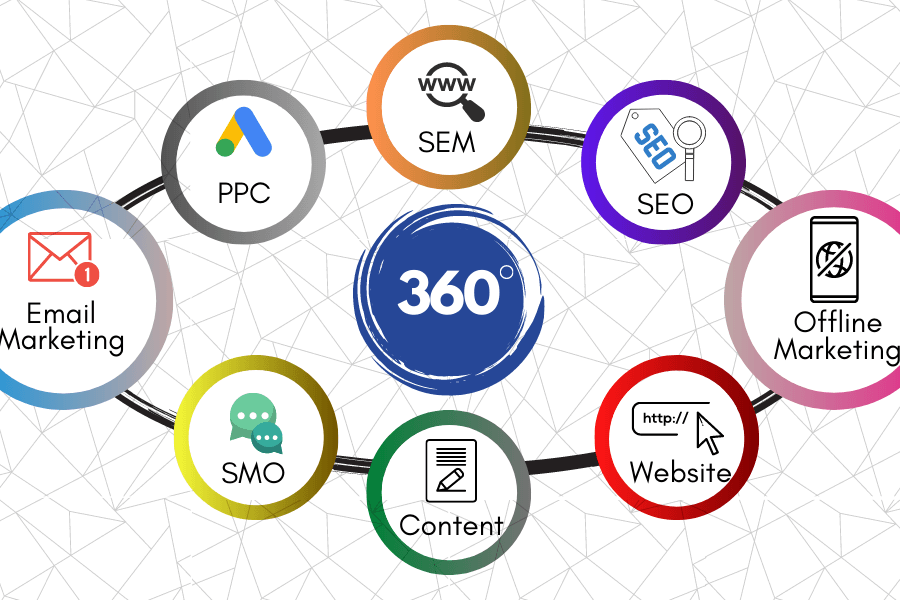
Why Your Business Needs a 360° Digital Marketing Approach?

A 360° digital marketing approach means integrating all your digital channels—such as SEO, content marketing, social media, paid advertising, email, and website optimization—into a unified, data-driven strategy. This holistic approach is essential for businesses that want to maximize their online presence, ensure brand consistency, and drive measurable growth.
The Problem with Isolated Marketing Efforts
- Many businesses struggle to achieve significant results because they rely on fragmented marketing tactics. For example, running Google Ads without a strong SEO foundation or posting on social media without a broader content strategy leads to:
- Inconsistent messaging
- Inefficient ad spend
- Missed opportunities to engage customers at key touchpoints
A local business may get traffic from ads, but if the website isn’t optimized for conversions or lacks compelling content, those visits rarely turn into sales.
What Is a 360° Digital Marketing Strategy?
- A 360° strategy covers every angle of your online marketing by:
- Integrating multiple digital channels (SEO, PPC, content, social, email, etc.)
- Ensuring messaging and branding are consistent across all touchpoints
- Engaging customers at every stage of the buyer’s journey
- This approach creates a seamless and unified brand experience, increasing the likelihood of converting prospects into loyal customers.
- Key Components of a 360° Digital Marketing Approach
Why a 360° Strategy Is Essential in 2025
1. Consistent Brand Experience:
Customers interact with brands across multiple platforms. A 360° approach ensures they receive a consistent message and experience, building trust and credibility.
2. Wider Audience Reach:
By leveraging every relevant channel, your brand can reach and engage more potential customers at various stages of their journey.
3. Improved ROI:
Integrated campaigns reduce wasted ad spend and increase the effectiveness of every marketing dollar by targeting the right audience with the right message at the right time.
4. Data-Driven Optimization:
Combining analytics from all channels allows for continuous improvement and smarter decision-making, leading to better results over time.
5. Long-Term Sustainability:
A holistic approach supports business growth, competitiveness, and adaptability in a rapidly evolving digital landscape.
Steps to Build a 360° Digital Marketing Strategy
- Define and segment your target audience for tailored campaigns.
- Develop an integrated marketing plan covering all digital touchpoints.
- Use real-time analytics to track performance and optimize campaigns.
- Personalize customer experiences across channels for higher engagement.
Conclusion
Relying on isolated marketing tactics is no longer sufficient in today’s digital-first world. A 360° digital marketing approach ensures all your efforts work together, delivering a seamless customer experience and driving measurable business growth. Businesses that adopt this strategy benefit from increased visibility, stronger brand loyalty, improved ROI, and long-term sustainability.
FAQs:
1. What makes a 360° digital marketing strategy ideal for local businesses?
A 360° strategy ensures that local businesses stay visible and relevant across all online channels—Google Search, Maps, social media, and more. By integrating local SEO, geo-targeted ads, localized content, and email marketing, businesses can reach nearby audiences with tailored messages. This increases foot traffic, appointment bookings, and local trust. For example, a restaurant can combine SEO-optimized Google My Business listings with Instagram promotions and email newsletters featuring local events.
2. How can I tailor a 360° digital marketing strategy to a specific region or city?
To geo-optimize your strategy:
Use location-based keywords in content and metadata (e.g., “Digital Marketing in Austin, TX”).
Optimize Google My Business and map listings.
Run geo-targeted Google Ads and social media campaigns.
Create region-specific landing pages with testimonials, events, or offers.
This localization boosts relevance in search results and drives region-specific traffic and conversions.
3. How do I measure the effectiveness of a 360° digital marketing campaign?
Effectiveness is measured by tracking KPIs across each channel:
SEO: Organic traffic, keyword rankings, bounce rates.
PPC: Click-through rates (CTR), cost per click (CPC), conversion rates.
Email: Open and click rates, unsubscribe rates.
Social media: Engagement, follower growth, and impressions.
Use tools like Google Analytics, SEMrush, HubSpot, and Meta Business Suite to unify data and analyze results holistically.
4. What common mistakes should I avoid when implementing a 360° strategy?
Running disjointed campaigns across different platforms without a central strategy.
Ignoring mobile optimization, which affects user experience and conversions.
Not using analytics to refine campaigns.
Sending mixed brand messages due to a lack of tone or visual consistency.
Avoiding these pitfalls ensures smoother execution and better results from your marketing investment.
5. How often should I review and update my 360° marketing plan?
Review your digital marketing strategy at least quarterly. However, campaign-specific optimizations should be done weekly or bi-weekly, depending on performance. Trends, customer behavior, and platform algorithms change quickly. Staying agile ensures your strategy remains effective and competitive, especially in dynamic local markets.

Let’s Elevate Your Digital Presence
You have a powerful story; We provide the strategy, creativity, and technology to handle all your marketing needs under one roof. Ready to see results?

