

Address
18, Bahir Sarbamangala Road, Punjabi Para, Subhas Pally, East Burdwan, West Bengal, India - 713101
Get In Touch
9332416765
Mail Us
info@pinkshadowmedia.com
Recent Blogs
November 9, 2026
November 3, 2026
 Change Language

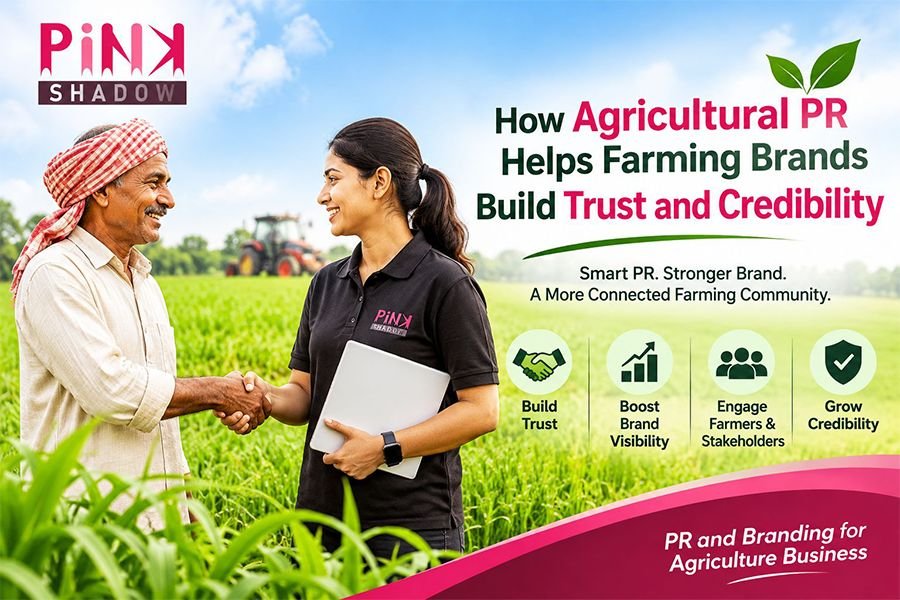
How Agricultural PR Helps Farming Brands Build Trust and Credibility

The agricultural industry depends on trust, relationships, and reputation. Farmers, distributors, dealers, agribusiness owners, and agricultural product manufacturers want to work with brands they can rely on. Whether a company sells seeds, fertilizers, pesticides, farming equipment, or agricultural technology, building a positive reputation plays an important role in long-term business growth.
This is where pr and branding for agriculture business becomes valuable. Public relations (PR) helps agricultural companies communicate their expertise, share meaningful stories, connect with stakeholders, and establish credibility in competitive markets. It goes beyond traditional advertising by focusing on genuine relationships and consistent brand communication.
Today, agricultural brands need more than product promotion to stand out. They must demonstrate their industry knowledge, communicate product value, engage with farming communities, and build lasting relationships with their audiences.
What Is Agricultural PR and Why Does It Matter?
Agricultural PR refers to the strategic communication activities that help farming businesses build a positive public image and maintain strong relationships with their target audiences. It includes media outreach, farmer engagement, product awareness campaigns, educational content, community initiatives, and corporate communication.
Unlike conventional advertising, agricultural PR focuses on building trust through information, experiences, and meaningful interactions.
For example, a fertilizer company can promote its products through advertisements, but it can build stronger credibility by sharing verified product information, conducting field demonstrations, publishing farmer success stories, and communicating with agricultural experts.
A well-planned agricultural PR strategy can help businesses:
- Build credibility among farmers and agricultural professionals.
- Improve brand awareness in rural and urban markets.
- Communicate product benefits and industry expertise.
- Strengthen relationships with distributors and dealers.
- Develop a positive reputation within agricultural communities.
- Support long-term business growth through consistent communication.
1. Builds Trust Through Authentic Agricultural Communication
Trust is one of the most important factors influencing purchasing decisions in agriculture. Farmers often consider product performance, recommendations, practical experience, and brand reputation before choosing agricultural products or services.
Effective agricultural PR helps businesses communicate honestly and consistently with their audiences. Instead of making exaggerated promotional claims, brands can share useful information about product applications, farming practices, research, and real-world experiences.
For example, an agricultural equipment manufacturer can publish educational articles explaining how its machinery supports different farming operations. Similarly, a seed company can share verified information about seed selection, cultivation practices, and suitable growing conditions.
This approach helps brands establish themselves as reliable sources of agricultural information.
2. Strengthens Brand Reputation Through Farmer Success Stories
Real farmer experiences can communicate product value more effectively than promotional messages alone. When farmers share their experiences with agricultural products, services, or technologies, other potential customers gain a better understanding of how a brand operates in real farming conditions.
Agricultural companies can use farmer testimonials, interviews, case studies, and video stories to highlight genuine experiences.
Some effective ways to use farmer stories include:
- Publishing farmer success stories on company websites.
- Creating short testimonial videos for social media.
- Sharing case studies about agricultural projects.
- Highlighting practical farming experiences at field events.
- Featuring farmer feedback in newsletters and brand publications.
These activities make brand communication more relatable and help agricultural businesses develop stronger connections with their target audiences.
3. Increases Brand Visibility Through Agricultural Marketing Campaigns
A strong reputation requires consistent visibility. Even a business with quality agricultural products may struggle to attract attention if its target audience does not know about its services or offerings.
Well-planned agricultural marketing campaigns help companies communicate their brand message across multiple platforms. These campaigns can combine public relations, digital marketing, social media, local events, media coverage, and educational activities.
For example, a company launching a new agricultural product could organize a field demonstration, distribute educational content, collaborate with agricultural experts, and share campaign updates through digital channels.
The objective is not simply to increase product visibility but to create meaningful interactions that help audiences understand the brand.
An integrated approach to PR and marketing across the farming sector allows agricultural businesses to maintain consistent communication with farmers, distributors, retailers, industry professionals, and other stakeholders.
4. Uses Agriculture Social Media Campaigns to Build Community Engagement
Social media has become an important communication channel for agricultural businesses. Platforms such as Facebook, Instagram, YouTube, and LinkedIn allow brands to share information, educate audiences, and interact with farming communities.
However, successful agriculture social media campaigns should offer more than regular promotional posts. They should provide information that audiences find useful, relevant, and engaging.
Agricultural businesses can create campaigns around:
- Seasonal farming tips and crop management information.
- Product demonstrations and application guidance.
- Farmer interviews and customer experiences.
- Agricultural events and field activities.
- Expert discussions and industry updates.
- Educational videos about modern farming technologies.
For example, a seed company can create a seasonal awareness campaign that explains seed selection, crop planning, and cultivation practices. A farming equipment brand can publish demonstration videos showing how its products work.
Consistent and informative social media communication helps agricultural brands build an active community and strengthen their online reputation.
5. Establishes Industry Authority Through Farming PR Thought Leadership
Agricultural brands can build credibility by demonstrating their knowledge and expertise. Farmers, agricultural professionals, distributors, and business partners are more likely to trust companies that consistently provide useful industry insights.
This is where farming PR thought leadership becomes important.
Thought leadership involves sharing expert opinions, practical knowledge, industry research, and informed perspectives on agricultural developments.
Agricultural companies can establish thought leadership through:
- Publishing expert articles on agriculture-related topics.
- Sharing insights about changing farming practices.
- Participating in agricultural webinars and industry events.
- Publishing interviews with agricultural specialists.
- Discussing innovations in agtech and sustainable farming.
- Contributing expert opinions to relevant media publications.
For instance, an agricultural technology company can publish insights about precision farming, smart irrigation, or data-driven agriculture. These activities help position the business as a knowledgeable industry participant rather than just another product seller.
6. Strengthens Relationships Through Stakeholder Campaigns in Agriculture PR
Agriculture involves multiple stakeholders, including farmers, dealers, distributors, agricultural researchers, government bodies, industry associations, and local communities.
Each group has different expectations and communication needs. Therefore, agricultural brands need strategies that address the interests of different stakeholders.
Stakeholder campaigns in agriculture PR help businesses create meaningful communication with these groups through targeted activities, industry engagement, educational programs, and community initiatives.
Some practical examples include:
- Organizing farmer awareness programs.
- Conducting dealer and distributor engagement events.
- Collaborating with agricultural experts and institutions.
- Hosting product demonstration sessions.
- Participating in agricultural exhibitions and trade events.
- Supporting community-based agricultural initiatives.
These activities help businesses strengthen professional relationships, improve communication, and build a positive reputation across the agricultural ecosystem.
7. Makes Product Launches More Effective With Farming PR Campaigns
Launching a new agricultural product requires more than announcing its availability. Businesses need to explain its purpose, intended audience, product features, and practical value.
A well-organized farming PR campaign can help agricultural companies introduce new products while building awareness and credibility.
For example, a company launching a new crop nutrition product could organize a field demonstration, invite agricultural experts, distribute educational materials, and publish product information through digital platforms.
A successful campaign may include:
- Pre-launch communication: Introduce the upcoming product and create awareness among relevant audiences.
- Expert engagement: Share relevant product information with agricultural professionals and industry stakeholders.
- Field demonstrations: Provide opportunities to understand how the product is used.
- Digital promotion: Publish videos, articles, and campaign updates across relevant channels.
- Post-launch communication: Share genuine feedback, educational resources, and campaign outcomes.
This integrated approach helps agricultural businesses communicate product value and develop stronger relationships with potential customers.
8. Why Agricultural Businesses May Need a Farming PR Agency
Managing public relations requires industry knowledge, strategic planning, communication skills, and consistent execution. Agricultural companies may not always have the internal resources to manage these activities effectively.
Working with a farming PR agency can help businesses develop structured communication strategies and maintain a consistent brand image.
A professional agency can support agricultural brands with:
- Agricultural media relations and press communication.
- Brand positioning and reputation management.
- Farmer engagement and awareness campaigns.
- Agricultural content development and storytelling.
- Social media campaign planning and execution.
- Product launch communication.
- Stakeholder engagement programs.
- Video production and digital brand promotion.
The right agency should understand the agricultural audience, industry challenges, communication channels, and the importance of building trust through relevant information.
For agricultural businesses looking to improve visibility and strengthen their market position, professional PR support can become a valuable part of their overall marketing strategy.
9. Measures the Success of Agricultural PR Activities
Building credibility takes time, so agricultural businesses should evaluate PR performance through more than immediate sales results.
A clear measurement strategy helps companies understand whether their communication activities are improving brand visibility, audience engagement, and stakeholder relationships.
Some useful performance indicators include:
- Media coverage: Number and quality of relevant media mentions.
- Brand awareness: Changes in brand searches and audience recognition.
- Social media engagement: Comments, shares, meaningful interactions, and audience growth.
- Website performance: Referral traffic, organic visits, and engagement with PR-related content.
- Stakeholder participation: Attendance at events, demonstrations, and awareness programs.
- Brand sentiment: Audience feedback, customer reviews, and overall public perception.
- Lead generation: Relevant enquiries generated through PR-supported campaigns.
Reviewing these indicators regularly helps businesses identify successful communication activities and improve future campaigns.
How Pink Shadow Media Supports PR and Branding for Agriculture Businesses
Agricultural businesses need a communication strategy that connects their products and services with the right audiences. At Pink Shadow Media, we understand the importance of combining brand communication, digital marketing, and rural audience engagement to support agricultural business growth.
Our approach to pr and branding for agriculture business focuses on helping brands improve visibility, communicate their value, and develop meaningful connections with their target markets.
Our services include:
- Agricultural Digital Marketing: Building online visibility through SEO, content marketing, and digital promotion.
- Social Media Marketing: Creating relevant campaigns that encourage engagement with farmers and agricultural audiences.
- Video Production: Developing product demonstrations, brand videos, farmer testimonials, and educational content.
- Rural Marketing: Supporting brands with communication strategies designed for rural audiences and local markets.
- Branding and Content Development: Creating consistent brand messages that communicate business expertise and product value.
- Campaign Management: Planning and executing promotional and awareness campaigns across relevant marketing channels.
By bringing these activities together, Pink Shadow Media helps agricultural companies build stronger brand communication and establish a more recognizable presence in the farming sector.
Conclusion
Agricultural PR plays an important role in building trust, improving brand reputation, and strengthening relationships across the farming industry. From farmer testimonials and educational content to media relations, social media engagement, and stakeholder campaigns, effective public relations helps businesses communicate their value beyond traditional advertising.
For agricultural companies, investing in pr and branding for agriculture business is not just about promoting products. It is about creating a reliable brand identity, demonstrating industry knowledge, and developing lasting relationships with farmers and other stakeholders.
With a consistent communication strategy and the right digital marketing support, agricultural brands can strengthen their credibility and create opportunities for sustainable business growth.
Pink Shadow Media supports agricultural businesses with integrated marketing, branding, content, video production, and rural marketing solutions designed to help brands connect with the audiences that matter.

Let’s Elevate Your Digital Presence
You have a powerful story; We provide the strategy, creativity, and technology to handle all your marketing needs under one roof. Ready to see results?

