
Address
18, Bahir Sarbamangala Road, Punjabi Para, Subhas Pally, East Burdwan, West Bengal, India - 713101
Get In Touch
9332416765
Mail Us
info@pinkshadowmedia.com
Recent Blogs
September 18, 2026
September 7, 2026
 Change Language
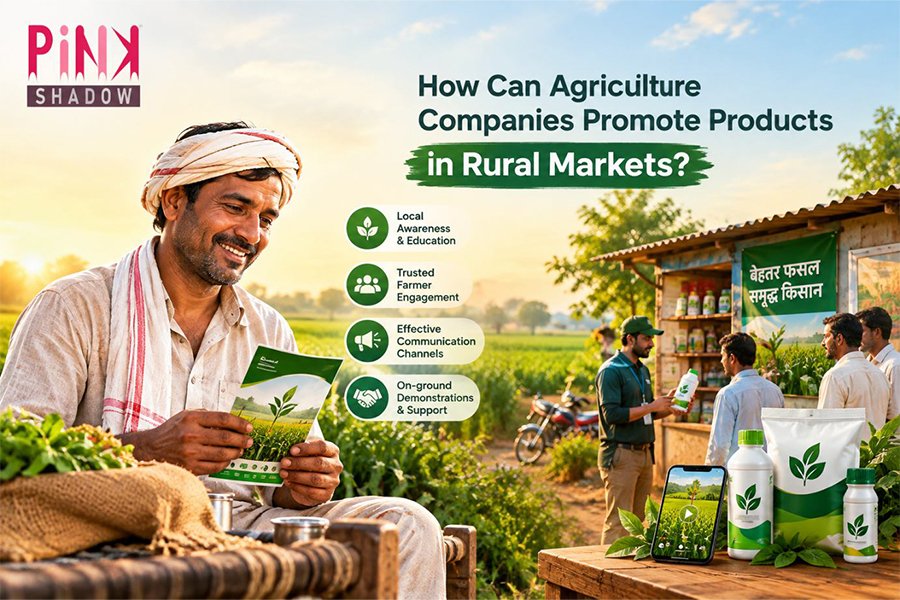
How Can Agriculture Companies Promote Products in Rural Markets?

Promoting agricultural products in rural markets requires a clear understanding of farmers, dealers, local buying habits, crop cycles, and regional communication preferences. Traditional marketing can create awareness, but digital channels can help agriculture companies reach the right audiences with useful information at the right time.
A Digital Marketing Agency for Agriculture can help businesses build this connection through content marketing, SEO, social media, video, WhatsApp, paid advertising, and lead generation. The objective is not simply to promote a product but to educate potential customers, build trust, and make it easier for interested buyers to take the next step.
Understand the Rural Customer Before Promoting the Product
Every rural market is different. Farmers may have different crops, farming practices, budgets, and product requirements depending on their location.
Before starting a campaign, businesses should understand:
- Which crops are common in the target region
- What problems farmers are trying to solve
- When demand for the product increases
- Which dealers and retailers serve the area
- What information customers need before purchasing
- Which languages and communication formats are preferred
This research helps businesses create digital marketing for agriculture companies that is relevant rather than generic.
For example, a company selling irrigation equipment can create different campaigns for vegetable growers, rice farmers, or horticulture businesses based on their specific requirements.
Create Useful Content for Farmers and Dealers
Agriculture marketing should provide information, not just advertisements.
Potential customers may want to know how a product works, how it should be used, which crops it supports, or what problem it is designed to address. Helpful content can answer these questions before a customer contacts the company.
Useful formats include:
- Product guides
- Crop-specific articles
- Short videos
- Product demonstrations
- Infographics
- FAQs
- Expert interviews
- Farmer education content
This type of agriculture digital marketing can support customers at different stages of their buying journey.
Instead of repeatedly saying that a product is effective, companies can explain its application, usage, features, and practical benefits in a simple way.
Use Regional-Language Communication
Language can significantly affect how easily agricultural information is understood.
Companies targeting rural audiences can create content in the languages commonly used in their target markets. This may include social media posts, videos, product explanations, WhatsApp messages, and educational articles.
Regional content should go beyond direct translation. The message should reflect local terminology, farming practices, and customer concerns.
For example, a crop-protection brand can create short regional-language videos explaining common crop problems and the recommended product application process.
This makes the communication more accessible and relevant.
Use Social Media to Build Product Awareness
Social media can help agriculture businesses maintain regular communication with their audiences.
Platforms such as Facebook, Instagram, and YouTube can be used for:
- Product awareness
- Educational content
- Demonstration videos
- Farmer stories
- Seasonal information
- Product updates
- Dealer communication
- Customer questions
Short videos can be particularly useful for explaining technical products. A machinery company, for example, can demonstrate how equipment operates instead of relying only on product photographs and written descriptions.
The objective should be to build an informative content presence rather than publish promotional posts every day.
This approach can become an important part of rural digital marketing for agri brands, particularly when content is adapted to local crops, languages, and customer needs.
Use WhatsApp for Direct Communication
WhatsApp can connect agricultural brands with customers, dealers, and sales teams.
Businesses can use it to share:
- Product brochures
- Demonstration videos
- Product information
- Dealer locations
- Seasonal updates
- Enquiry responses
- Educational content
For example, a company launching a product for a particular crop season can run an awareness campaign and invite interested customers to contact the business through WhatsApp.
This creates a simple path from awareness to enquiry and can support WhatsApp marketing for agri products.
Use Video to Explain Agricultural Products
Many agricultural products require explanation before customers understand their practical value.
Video can make this information easier to consume.
Agriculture companies can create:
- Product demonstration videos
- How-to videos
- Field demonstration videos
- Expert interviews
- Farmer testimonials
- Product comparison videos
- Frequently asked question videos
For example, an irrigation equipment manufacturer could show installation, operation, and practical use through a short video.
A digital marketing agency for agricultural products can help organize this content according to the customer journey, from product awareness to enquiry.
These activities can also form part of a broader digital marketing strategy for agricultural products.
Improve Search Visibility With SEO
Search engines can be an important source of information for farmers, dealers, distributors, and agricultural businesses.
People may search for information about farming equipment, fertilizers, crop protection, irrigation, seeds, agricultural suppliers, and product applications.
Businesses can create SEO-focused content around these questions and requirements.
A good strategy can include:
- Optimized product pages
- Educational blog posts
- Crop-specific content
- Frequently asked questions
- Location-focused pages
- Product application guides
- Helpful agricultural resources
This is where digital marketing services for agriculture companies can support long-term online visibility.
Instead of targeting only highly commercial keywords, companies can also answer informational searches that potential customers make before contacting a supplier.
Connect Digital Campaigns With Dealer Networks
Digital marketing can work alongside traditional agricultural distribution.
Dealers and retailers often play an important role in helping customers learn about and purchase agricultural products. Businesses can therefore connect online campaigns with their existing dealer network.
For example:
Online campaign → Customer enquiry → Local dealer → Product discussion → Purchase
Companies can also provide dealers with digital brochures, videos, product information, and campaign materials.
This approach helps connect integrated rural marketing with the offline sales process.
Plan Campaigns Around Agricultural Seasons
Agricultural demand is often influenced by crop cycles and seasonal requirements.
A company selling a farming product should therefore plan campaigns according to when customers are most likely to need that product.
Campaigns can be developed around:
- Sowing periods
- Planting seasons
- Irrigation requirements
- Pest-management periods
- Harvesting
- New product launches
- Agricultural events
- Regional farming cycles
Seasonal planning allows companies to deliver information when it is more relevant to customers.
For example, an irrigation business can increase educational content before periods when farmers are likely to evaluate irrigation solutions.
Build a Lead-Generation System
Getting attention is only the first step. Agriculture companies also need a way to turn interest into enquiries.
A digital marketing agency for agriculture companies can help businesses connect marketing activity with lead-generation systems such as:
- Website enquiry forms
- Landing pages
- Google Ads
- Social media advertising
- Phone enquiries
- Product request forms
- Dealer referrals
Each campaign should have a clear next step.
For example, a product awareness campaign could direct interested users to a dedicated page where they can request product information or contact a local representative.
Measure What Actually Generates Enquiries
Businesses should evaluate more than impressions and follower numbers.
Useful metrics include:
- Website visits
- Search impressions
- Organic traffic
- Enquiries
- WhatsApp conversations
- Phone calls
- Lead conversion rate
- Cost per lead
- Video engagement
- Campaign performance by location
These measurements help businesses understand which channels and content formats are producing meaningful responses.
Campaigns can then be adjusted based on actual performance rather than assumptions.
Common Mistakes to Avoid
Relying Only on Promotional Messages
Customers often need useful information before making a decision. Educational content should therefore be part of the strategy.
Ignoring Local Communication
A campaign designed without considering regional language and local farming practices may not connect effectively with its intended audience.
Depending on One Digital Channel
Social media alone may not be enough. SEO, websites, video, WhatsApp, paid advertising, and dealer communication can work together.
Not Following Up on Leads
Generating enquiries without a clear sales follow-up process can reduce the value of marketing activity.
Using the Same Message Everywhere
Different crops, regions, and customer groups may have different requirements. Content should be adapted accordingly.
Conclusion
Agriculture companies can reach rural customers more effectively by combining useful content with the right digital channels. SEO, social media, regional-language communication, video, WhatsApp, paid campaigns, and lead-generation systems can work together to build awareness and encourage genuine enquiries.
A Digital Marketing Agency for Agriculture can help businesses bring these activities together into a structured marketing strategy. The strongest approach is one that understands local audiences, follows agricultural seasons, supports dealer networks, and measures results based on meaningful business outcomes.
FAQs
1. How can agriculture companies promote products in rural markets?
Agriculture companies can combine regional-language content, social media, SEO, video marketing, WhatsApp, paid advertising, educational content, and dealer networks to reach rural customers and generate enquiries.
2. How can digital marketing help agriculture businesses?
Digital marketing can help agriculture businesses increase online visibility, educate potential customers, promote products, generate enquiries, and maintain communication with farmers, dealers, and distributors.
3. Why is regional-language content important for rural marketing?
Regional-language content can make product information easier to understand and allow businesses to communicate more naturally with audiences in specific markets.
4. Can social media help promote agricultural products?
Yes. Social media can be used for product awareness, educational content, demonstrations, customer engagement, seasonal campaigns, and lead generation.
5. How can WhatsApp help agriculture companies?
WhatsApp can be used to share product information, brochures, videos, updates, dealer details, and respond directly to customer enquiries.
6. Is video marketing effective for agricultural products?
Video can be useful for demonstrating products, explaining applications, showing field use, answering questions, and communicating technical information in an easy-to-understand format.
7. How does SEO help agriculture companies?
SEO can help agricultural businesses appear in relevant searches related to farming products, equipment, crop solutions, suppliers, and agricultural information.
8. What is rural digital marketing?
Rural digital marketing is the use of online channels such as search engines, social media, websites, video, messaging platforms, and digital advertising to communicate with rural audiences.
9. How can agriculture companies generate leads online?
Companies can generate leads through optimized websites, landing pages, search advertising, social media campaigns, WhatsApp, enquiry forms, and targeted agricultural content.
10. What should companies consider when choosing a digital marketing agency for agriculture?
Companies should consider the agency's experience with agricultural audiences, content capabilities, SEO knowledge, advertising expertise, lead-generation process, reporting, and understanding of rural markets.

Let’s Elevate Your Digital Presence
You have a powerful story; We provide the strategy, creativity, and technology to handle all your marketing needs under one roof. Ready to see results?

